In many workshops, cost estimation is still manual; this guide teaches you how to define machining phases and times with professional accuracy using Fabriqer.

If you run a workshop, this is the question that decides your margin: how much do you need to charge per machine hour to make money? The short answer: it depends on your machine, your utilisation and your overheads — and most workshops are working with an outdated figure.
These are the hourly selling rates commonly used in the Spanish market:
These figures are hourly selling prices, not costs. The difference between the two is your margin, which is why getting the cost right comes first.
The machine-hour cost is calculated like this: (depreciation + financing + floor space + energy + maintenance + tooling + attributable labour + overheads) ÷productive hours per year.
The most expensive mistake isn't in the costs: it's in the productive hours. A year has 1,750–1,800 working hours per shift, but between setups, maintenance, load gaps and scrap parts, the machine actually produces 60–75% of that. If you divide your costs by 1,800 hours but only produce 1,200, you're selling every hour 33% cheaper than you think.
Properly defining your machining phases and their times is what lets you know how many hours each machine really produces.
For a €250,000 machining centre working one shift: depreciation €31,250, financing €4,500, floor space €2,250, energy €5,040, maintenance €10,000, tooling €9,000, attributed labour €17,500 and overheads €12,000. Total: €91,540 a year.
With 1,400 real productive hours, the cost is €65.40 per hour. If you sell the hour at €60 “because that’s what everyone charges”, you lose money on every part.
Calculating your hourly cost is an exercise you do once or twice a year. Estimating the times for each part is something you do every day, and that's where every technical offer is won or lost. The time-estimation AI from Fabriqer analyses the part and estimates machining time consistently, so the hourly rate you've worked so hard to fine-tune is applied to reliable times, not hunches. Find out how AI machining time calculation works.
Want to see it with your own parts? Book a Fabriqer demo and bring two or three real drawings.
As a market reference, between €35 and €95/h depending on the machine type: 2-axis lathes at the lower end of the range and 5-axis centres at the top.
By adding depreciation, financing, floor space, energy, maintenance, tooling, attributable labour and overheads, and dividing by the year's real productive hours, not the theoretical ones.
At least once a year, and whenever a structural cost changes: an energy price rise, a new collective agreement or the purchase of a new machine.
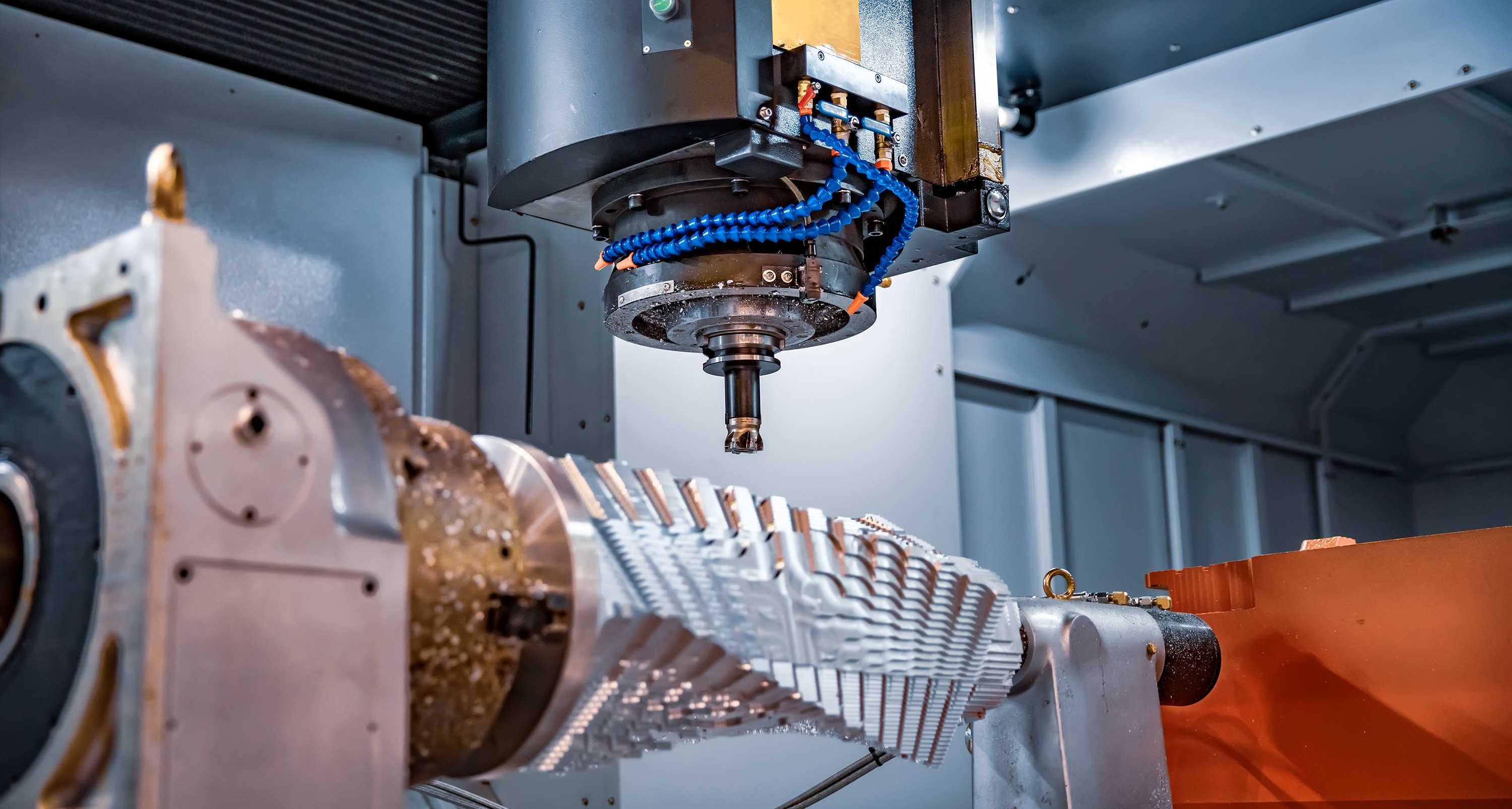
In many workshops, cost estimation is still manual; this guide teaches you how to define machining phases and times with professional accuracy using Fabriqer.

.jpg)
We review the most common mistakes when digitalising a workshop and how to avoid them to achieve an efficient, cost-effective, and sustainable transition.
.jpg)
We analyse why it’s necessary to move beyond makeshift tools and the real benefits that technical management software designed for custom manufacturing workshops can provide.